
Preserving is certifying
A graded piece deserves a case worthy of it. The TGM case is not an accessory: it is the physical half of the certification, the part that guards value over time and lets a piece be preserved and displayed at the same time.
The craft process
Every TGM case begins with a plexiglass sheet and a drawing made to measure for the format of the piece. Plexiglass throughout: a precision cut, a series of press-fit joints and a dedicated bonding hold the case together. It is craft work that makes far more sense up close, so here are the five steps.
From sheet to component
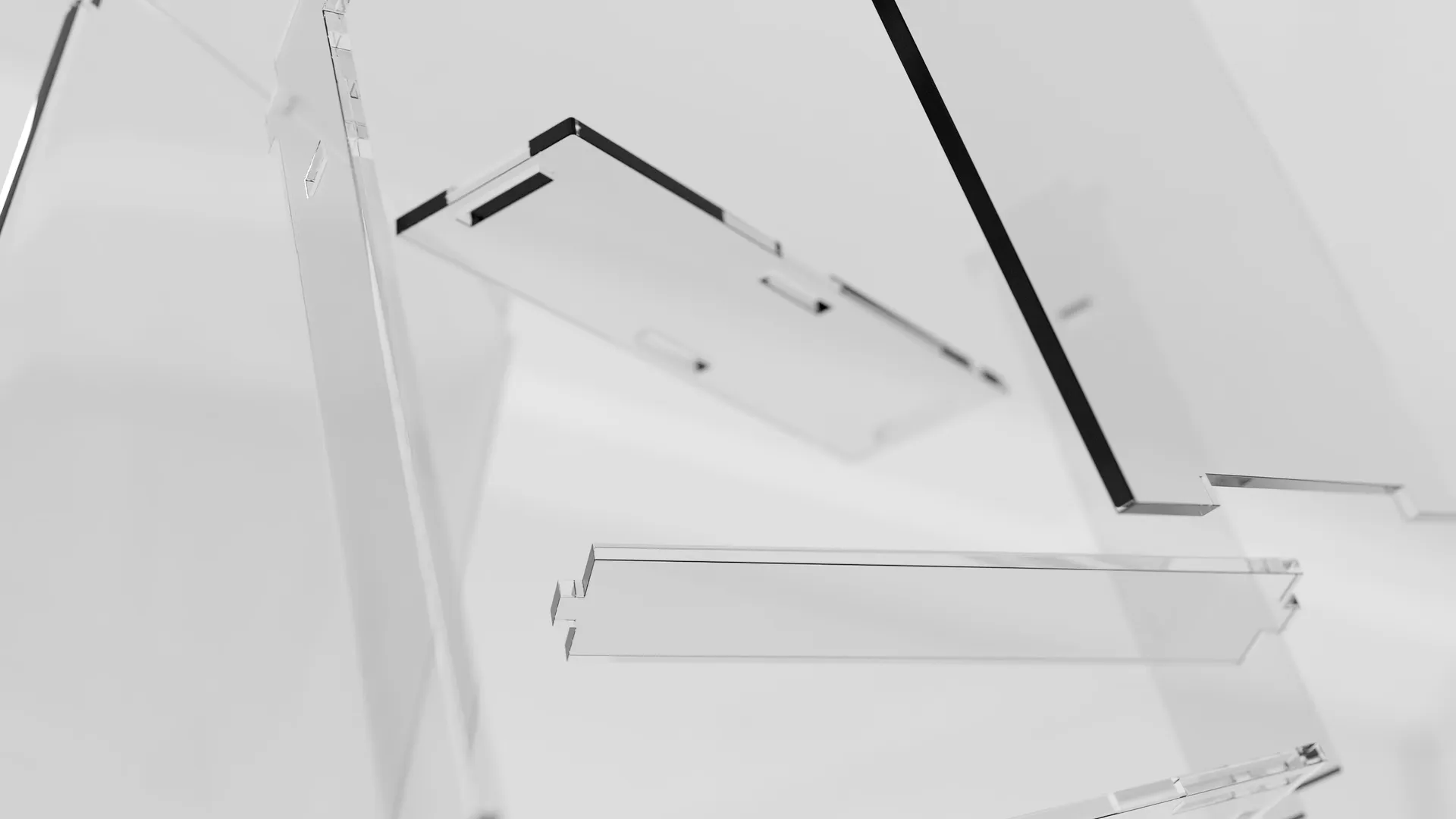
It all starts with a plexiglass sheet. The laser cuts every component to the tightest tolerances: the precision of this step is what makes the press-fit assembly possible.
A handful of parts, cut to measure
Panels and uprights, all in plexiglass: a complete case is made of very few elements, each one cut for the exact format of the piece it has to hold, from the Game Boy to the largest boxes.
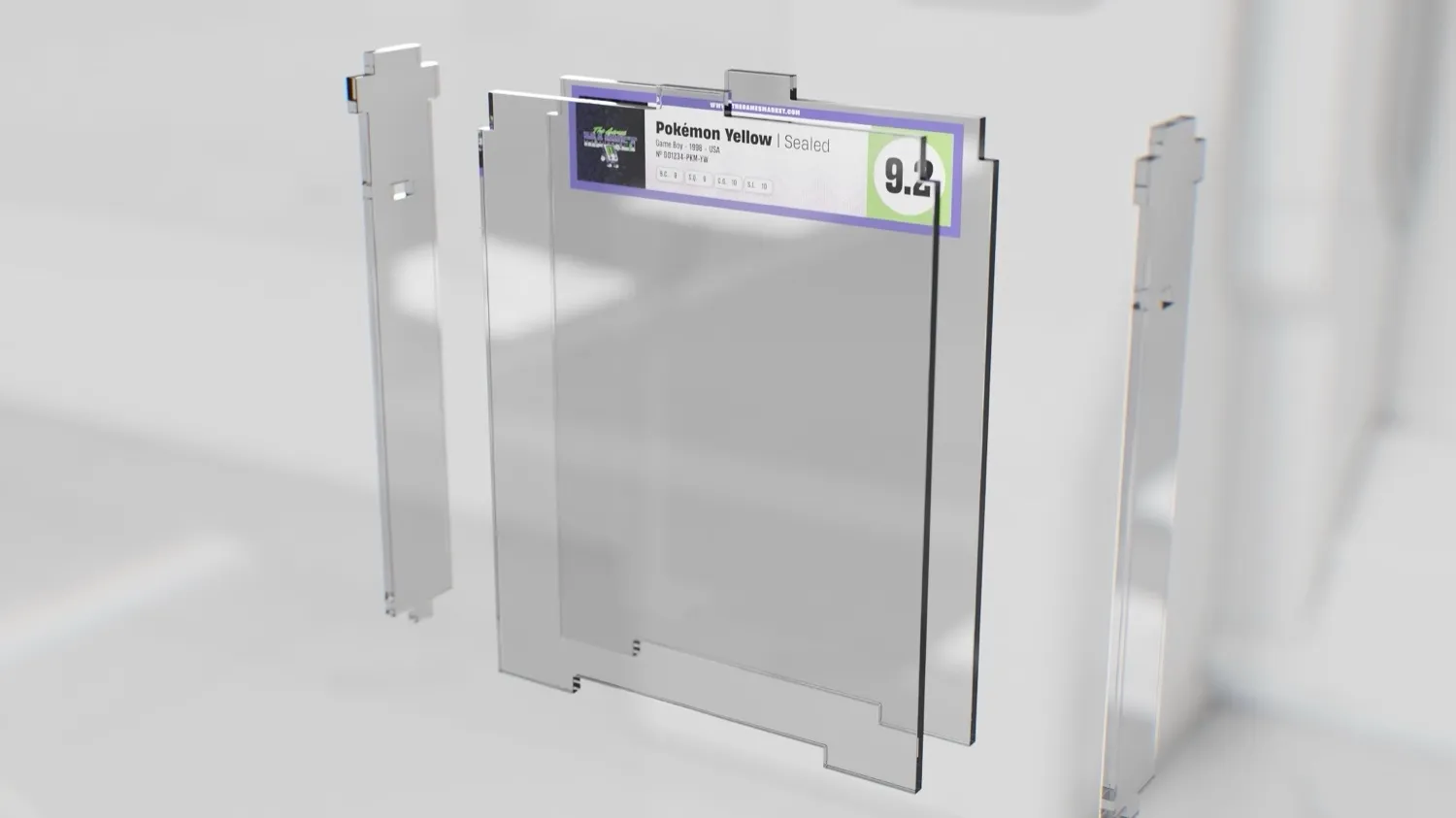
A frame that holds it all together
At the center of the case sits a structural plexiglass frame: it is the element that gives the whole assembly its rigidity and keeps the piece perfectly still, without ever pressing on it.

It presses together, then it is bonded
The components press-fit into one another and are locked with a dedicated plexiglass bonding. The result is a clean, rigid, crystal clear case, ready to take the piece in.

Case and showcase at once
Sealed inside the case, the piece is protected and on show at the same time: it reads from every side, grade and documentation stay legible, and the collection turns into something worth showing.
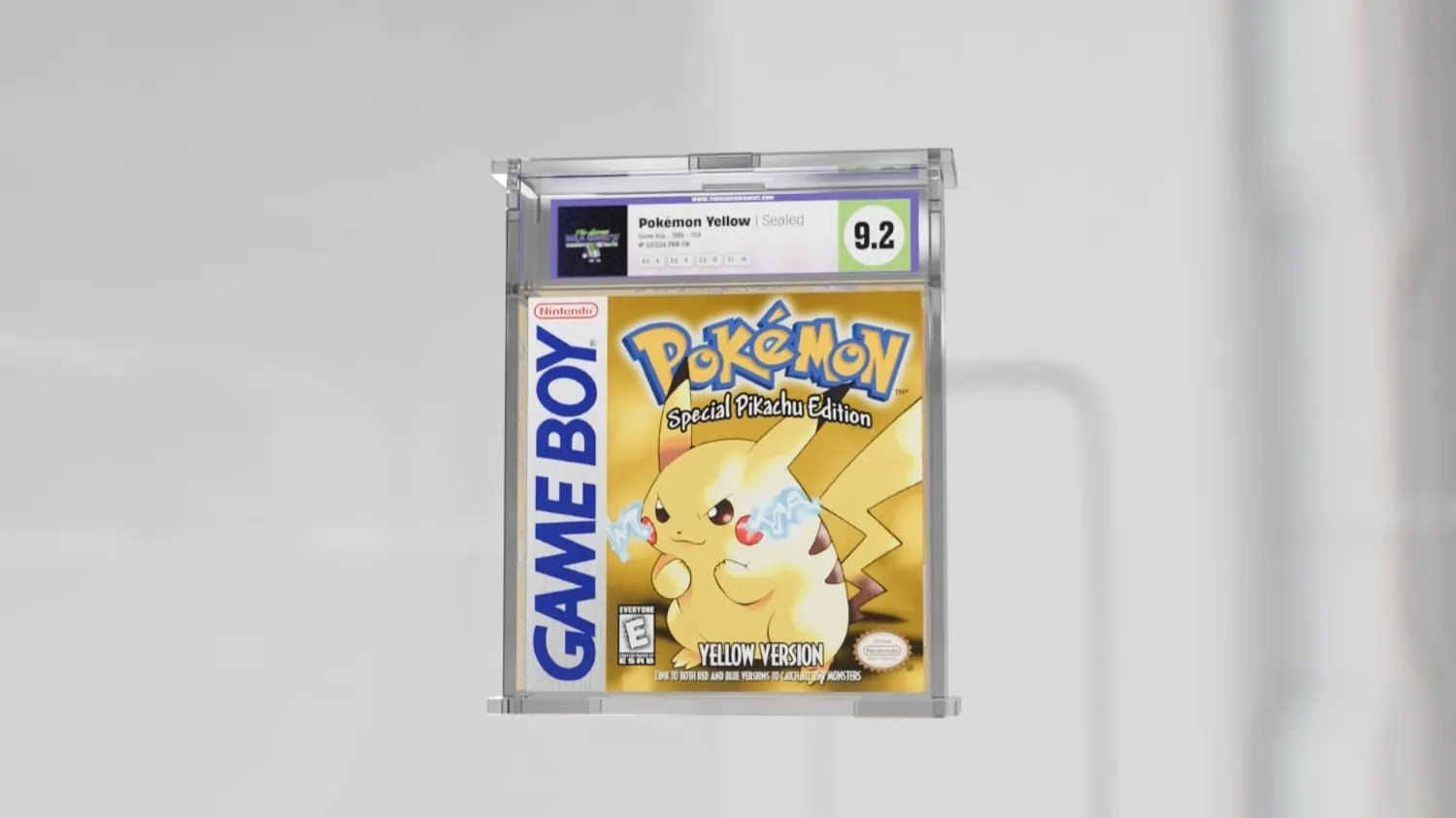
No screws, no metal parts. Only plexiglass, a precision cut, press-fit joints and a dedicated bonding. The case closes around the piece like a three dimensional frame.
Custom box, when a video game becomes art
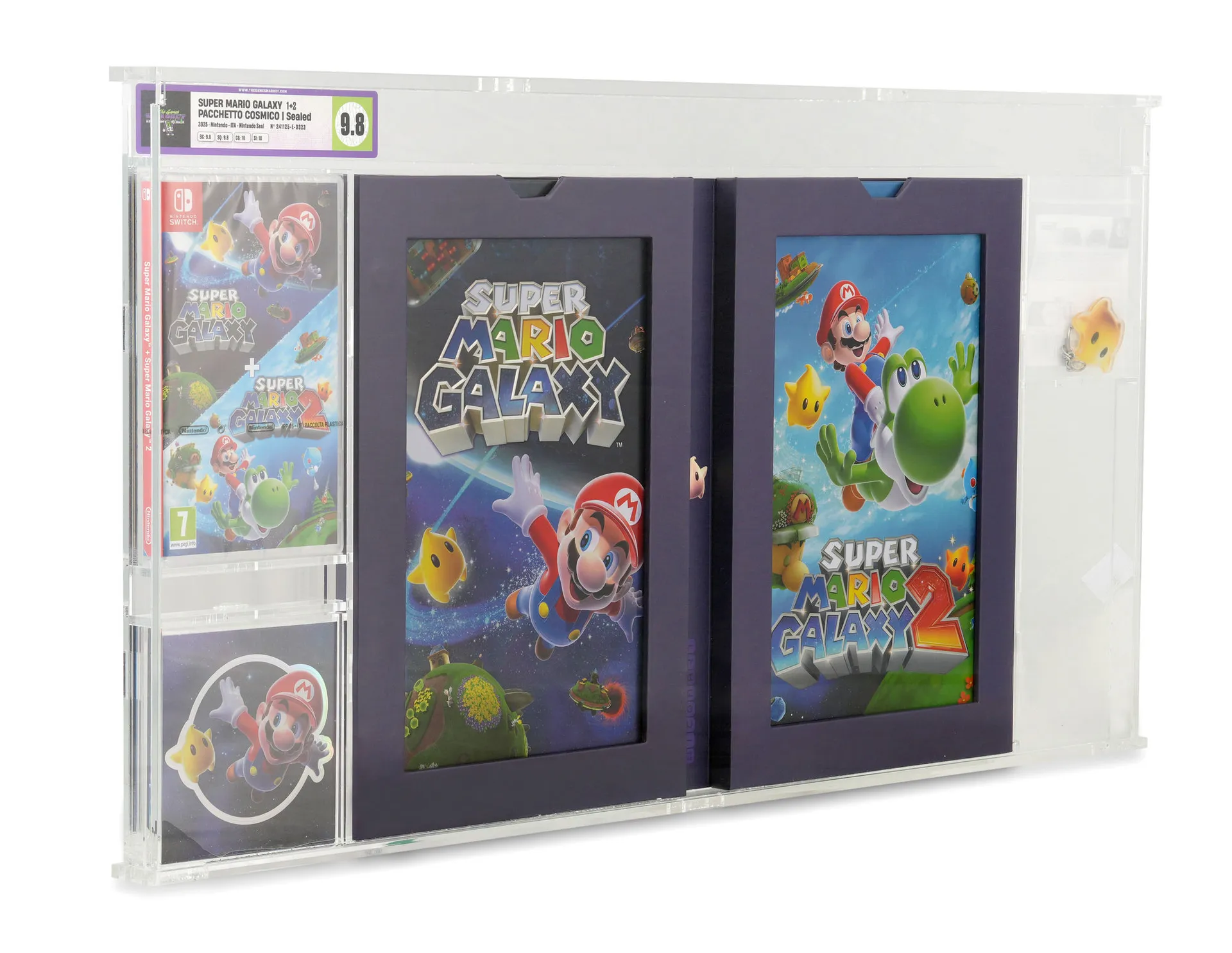
The case is the starting point. When a collector, a store or a company wants to present several pieces as one whole, the case becomes a custom box: a made to measure showcase that stages two or more titles as if they were a single work, with a dedicated frame, a coordinated graphic identity and a clear story. That is how a collection stops being a pile of graded pieces and becomes a collectible object in its own right.
Super Mario Galaxy 1 + 2 · "Pacchetto Cosmico"
It is a single Switch title that Nintendo shipped as a set of loose parts: the game case, the cardboard sleeves for Galaxy 1 and Galaxy 2, the decorative postcard of Mario in flight. On their own they are promotional extras; staged inside a dedicated custom box, with a single frame, a space themed set and the TGM certification label, they become a genuine collector's piece. The list price of the game was €79.90; presented as a custom box, the object sold for €500. This is where a video game stops being a video game and becomes art.
Three scenarios, one service
The custom box speaks to three distinct customers: the collector who wants to build a catalog highlight, the store that needs a premium product with a margin above the average, the company that uses the custom box as a celebratory gift or a piece of brand storytelling. The same craft work, three different commercial channels.
Three things the case always does
Information
The details on the certification label, sealed together with the game, keep the state of preservation and the quirks of the piece in plain sight.
Preservation
It closes the piece in and shelters it from dust, knocks and handling: time stops being an enemy and stops leaving its mark.
Presentation
A clean, well made case stages the piece: the collection stops living in a drawer and becomes something to put on display.
From the collection to the museum
The same care that protects works of art and private collections, carried over to the video game to raise it to the standing of cultural heritage.
It is a direction The Games Market is exploring from the ground where it stands firmest: the object, its case, its certification. Museum curation of the video game is a hint today, a project tomorrow.
A case for your piece
Standard cases for every format in the catalog, custom boxes for the pieces that matter. Write to us with the title and the format and we will tell you what we can do.